Fisheries School Project , Kadalundi
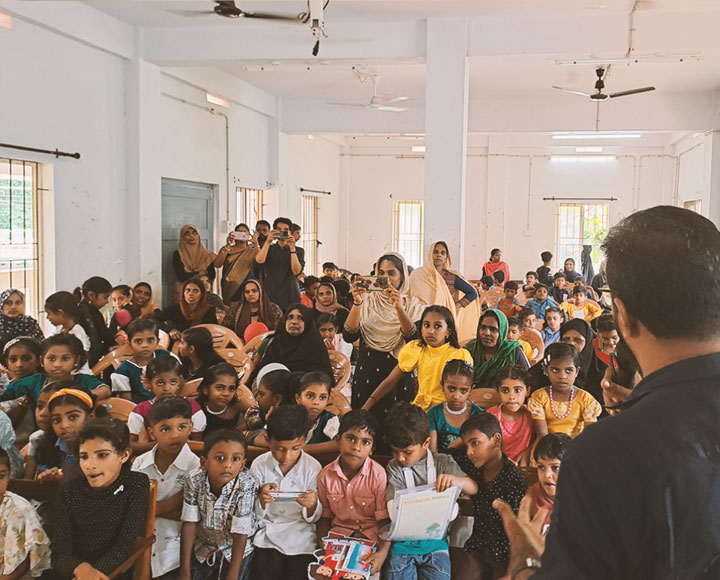
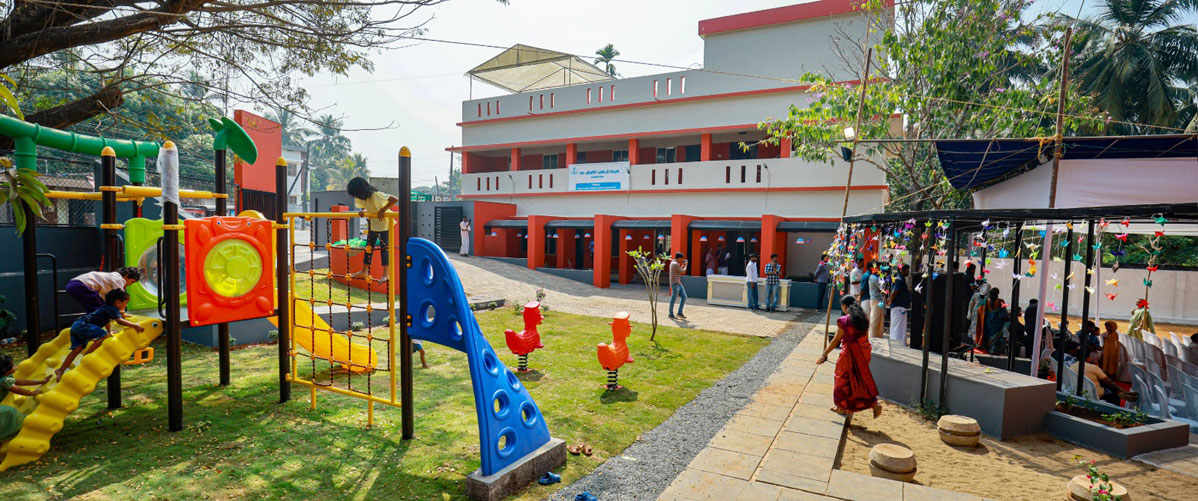
The Government Fisheries Lower Primary School (GFLPS), Kadalundi was established in 1921 under the guidance of the Department of Education, Government of Kerala. Its establishment marked a significant milestone in providing a hub of academic excellence for the fisher community embedded within the rural landscape of Parappanangadi block, Malappuram district. With Malayalam as the medium of instruction, the school imparts education to students from 1st to 5th standard. With a total co-ed population of students, who are all fisherfolk, GFLPS Kadalundi is more than institution, it is a close-knit community.
1. Academic enhancement
2. Social emotional development
3. Teacher quality enhancement
4. Community engagement
Academic Enhancement
Using the ASER tool developed by Pratham, assessments were conducted on students’ Arithmetic, English and Malayalam reading skills between 3rd and 5th standard. Results revealed that students were behind academic benchmarks and required additional support. Remedial classes were provided to about 30% of the student body for three months. 100% of those who received support demonstrated enhanced proficiency for their educational level. This underscores the effectiveness of targeted interventions in enhancing academic performance. Additionally, the distribution of books during the summer camp contributed to a marked improvement in reading habits in 100% of the students. Activities, such as English language acting exercises and theatre workshops, led to discernible improvements in communication skills and overall language development, evidenced by a 40% increase in students verbal proficiency.
Social Emotional Development (SEL)
Several key stats demonstrate the impact of the SEL assessment. Significantly, 51% of all students successfully identified all four emotions, demonstrating heightened emotional awareness. This suggests growing emotional intelligence, which is key to effective communication, empathy, healthy relationships and general well-being. Arts and crafts training had a remarkable impact fostering creativity and inclusive participation among 100% of the students, with 10% actively participating in panchayat arts festivals. This highlights the program’s effectiveness in nurturing interests and skills beyond the classroom.
Teacher Quality Enhancement
An excellent example of the enhancement of teaching skills occurred in early 2024. Teachers were given comprehensive academic master plan training which they quickly put to work by formulating a master plan of their own. The teachers then engaged in follow-up and implementation of their master plan. This exercise played a pivotal role in aligning educational goals with strategic initiatives
Community Engagement
An Iftar event saw the active participation of 145 students, and their parents. Organized by the 10-member Parent Teacher Association (PTA), the success of the event demonstrates the impact of parental involvement which surged from 10% to 40%. This kind of collaboration is particularly encouraging and ensures diverse perspectives in decision-making and a more inclusive educational environment
Facts & Figures
• Year one
• 145 students from fishing families
• 36% of students benefit from remedial class
• 19% of students active in theatre workshops
• 100% of teacher improved basic computer skills
• Year two: influenced 65 schools and 69,000 students
• Year five: the Mission project expands to 966 schools and over 1.5 million students
• Exponential growth with six state governments adopting and replicating the model
• Established global partnerships across Asia, Africa, the UK and the USA
Update Facts & Figures using the information below:
- 40% of children demonstrate significant improvement in public speaking and presentation skills.
- Through systematic assessment and training to students, 100% of students have acquired age appropriate reading,writing and arithmetic skills.
- 100% of teachers improved their digital proficiency through basic computer training.
- All teachers also received training in narrative practices, enhancing their ability to connect with students through stories and reflective learning.
- 100% of students gained regular access to the school library, encouraging consistent reading habits.
- Creative arts and crafts activities reached every student, nurturing creativity and inclusive participation.
- Parental participation rose from 10% to 40%, reflecting stronger community engagement and trust in the school.
- 20% of the mothers from the community regularly participate in small-scale skill development workshops, opening doors to self-employment and financial independence.
EDUCATION